


In short: Starting tretinoin usually means some dryness, peeling and redness in the first weeks, and some people see new breakouts around weeks 3 to 6. FDA labels say improvement in acne can take 6 to 12 weeks. At Increase Health, a licensed provider decides whether compounded tretinoin suits your skin. Start with the skin care questionnaire.
What does tretinoin treat?
Tretinoin is a prescription retinoid. FDA-approved tretinoin products such as Retin-A are approved to treat acne. One product, Renova, is approved only to help reduce fine facial wrinkles, alongside a full skin care and sun-avoidance routine. Its label says, in capital letters, that it "does not eliminate wrinkles, repair sun-damaged skin, reverse photoaging, or restore more youthful or younger skin"12.
The Renova label is unusually frank about its limits2:
- It hasn't been shown to help mottled pigmentation, rough skin, coarse wrinkles or other signs of long-term sun damage.
- Many people in its trials improved with skin care and sun avoidance alone, without tretinoin.
- People with medium to dark skin didn't improve more than with sun avoidance and skin care.
- Safety and results beyond 52 weeks haven't been established.
For acne, the American Academy of Dermatology's 2024 guideline gives topical retinoids a strong recommendation3.
Our tretinoin is compounded. Compounded medications are not FDA-approved, and FDA does not review them for safety, effectiveness or quality4. The label evidence on this page comes from FDA-approved products, not from our formula. Your care team and its licensed providers will decide whether tretinoin suits your skin.
How do I start using tretinoin?
Follow your prescription label first. In general: apply it at night to clean, fully dry skin, use a small amount for your whole face, keep it away from your eyes, nostrils and mouth, and wear broad-spectrum SPF 30 or higher every morning. Your care team may have you start every other night1256.
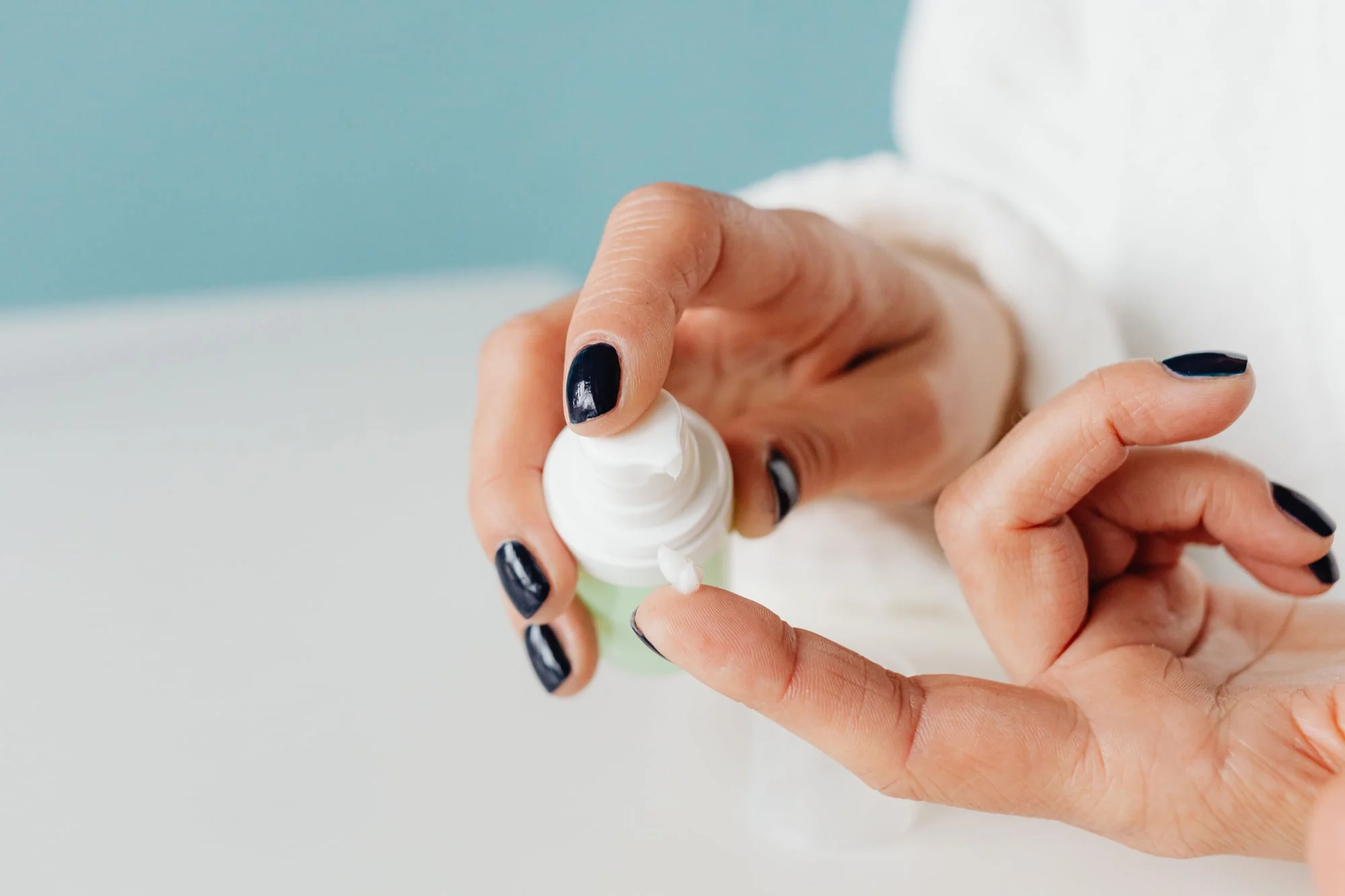
- At night, wash and dry. Use a mild cleanser and pat dry. Wait until your skin is completely dry; the Renova label suggests 20 to 30 minutes2.
- Use a small amount. The Renova label describes a "pearl-sized" amount for the whole face; the Retin-A label says enough to lightly cover the area. Using more won't work faster126.
- Keep it away from the corners of your eyes, nose and mouth, and from open wounds1.
- Follow your starting schedule. If your care team says to start every other night, or less often, do that. Build up only as they direct5.
- Moisturise as your care team suggests. Dermatologists sometimes suggest applying moisturiser first to reduce irritation, but only make that change with their help6.
- Every morning, sunscreen. Use broad-spectrum, water-resistant SPF 30 or higher on all skin not covered by clothing. Add a hat and shade, and skip sunlamps. If you get sunburned, stop until your skin recovers and tell your care team16.
- Go easy on treated skin. The labels say waxing, chemical hair removers, electrolysis, abrasive scrubs, drying cleansers, astringents and high-alcohol products can increase irritation12. Wind and cold can too1.
- Don't add other exfoliating acids or retinoids unless your care team says so.
What do the first weeks feel like?
Expect some dryness, peeling and redness at first, and maybe some stinging. In trials of an FDA-approved tretinoin gel, skin reactions mostly began in the first 2 weeks and peaked around weeks 2 to 3. The Retin-A leaflet says early discomfort or peeling usually settles within 2 to 4 weeks17.

What to expect, week by week
Weeks | What's normal | Call your care team if |
|---|---|---|
1–2 | Dryness, tightness, flaking and some redness. Mild stinging when you apply it. Reactions often start now7 | Burning that doesn't settle, or raw, cracked, swollen or blistering skin. It gets in your eyes and they stay irritated |
3–6 | Irritation often peaks around weeks 2 to 3, then usually settles within 2 to 4 weeks17. Some people notice new blemishes around weeks 3 to 61 | Peeling or redness is getting worse, not better. Painful, deep spots. Dark patches appear where your skin was irritated5 |
6–12 | The Retin-A label says improvement in acne can continue to show after 6 to 12 weeks, and AAD says it takes at least 6 to 8 weeks to see fewer breakouts16. Results vary and aren't guaranteed | Your skin is clearly worse than before you started, or you see no change at all by around 12 weeks; your care team may review your plan |
12+ | Keep using it as prescribed, with daily sunscreen. The Retin-A leaflet says not to stop at the first signs of improvement1. Trials of tretinoin for sun-damaged skin ran from 16 to 48 weeks289 | New irritation after a settled spell, a sunburn, or you become pregnant or start trying to conceive |
Is it a purge or irritation?
Some people get new blemishes early on. The Retin-A label says this can happen around weeks 3 to 6, comes from deeper spots that were already forming, and isn't a reason to stop. Not everyone gets it. Burning, raw or swollen skin is irritation, not a purge, so message your care team1.
No study has measured how long a "purge" lasts. Fixed timelines you may read online don't come from research; the only verified timeline is in the FDA label1. If irritation becomes too much, the Retin-A label says prescribers may have you use it less often or pause for a while. Let your care team and its licensed providers make that call1.
Does a stronger tretinoin work better?
Not necessarily. In a 48-week trial of an FDA-approved tretinoin cream for sun-damaged skin, a lower and a higher strength improved skin similarly, but the higher strength caused more irritation. Your care team and its licensed providers will set your strength based on your skin and how it responds8.
That's why going faster or using more isn't a shortcut. AAD says applying more than recommended won't clear acne faster6.
Can I use tretinoin with other skin care or GHK-Cu?
Check with your care team before adding anything. The labels say other skin medicines, abrasive or drying products and some hair removal can add irritation. People also ask about copper peptide (GHK-Cu) products: the only study we found of the two together was in skin cells in a dish, so there's no clinical evidence on combining them1210.
- Add one new product at a time, so you can tell what causes a reaction.
- Plain, gentle products are easiest on your skin while it adjusts.
- There's no evidence that GHK-Cu reduces tretinoin's side effects, or that the two cancel each other out10.
- Tell your care team about every product you use, including anything from a salon or clinic.
Can I use tretinoin if I'm pregnant or trying to conceive?
No. Don't use tretinoin if you're pregnant or trying to become pregnant. The Renova label says not to use it in pregnancy or when attempting pregnancy, and AAD says retinoids should not be used during pregnancy. If you become pregnant while using it, stop and contact your care team right away25.
Some people assume a cream is fine because it's topical. The labels and AAD still advise against it, and this page follows them. Our intake also excludes anyone who is breastfeeding or planning a pregnancy.
How do I get tretinoin through Increase Health?
Complete the skin care intake online. A licensed provider reviews your skin history and prescribes tretinoin only if it's appropriate. It's $345 for 3 months, cream or gel, as one payment. Your card is charged only if a provider approves, and there's no subscription. Prices as of September 2026.
- Complete the online intake.
- A licensed provider reviews it. You need to be 18 or older, not pregnant, planning pregnancy or breastfeeding, without an active severe eczema or rosacea flare, and willing to use daily sun protection.
- If tretinoin is appropriate, you're prescribed it. If not, you pay $0.
- You pay once for 3 months. Nothing auto-renews. Klarna's 4 interest-free payments are available.
- Your tretinoin ships to your door, and you can message your care team.
Our tretinoin is compounded, so it is not FDA-approved, and FDA does not review it for safety, effectiveness or quality4.
What people often get wrong
- "More product, or nightly use from day one, works faster." The Retin-A leaflet says too much irritates and won't give faster or better results. AAD agrees16.
- "Every new bump is the purge, and it lasts exactly 4 to 6 weeks." The label says some people notice new blemishes around weeks 3 to 6. No study defines how long a purge lasts, and not everyone has one1.
- "A higher strength gives better results." In a 48-week trial, lower and higher strengths improved sun-damaged skin similarly; the higher one irritated more8.
- "Tretinoin reverses aging." The Renova label says it does not eliminate wrinkles, repair sun-damaged skin, reverse photoaging or restore younger skin2.
- "It's a cream, so it's fine in pregnancy." The Renova label and AAD say not to use it during pregnancy25.
When to get help
- Call 911 for trouble breathing or swelling of your face, lips or throat. True allergy to tretinoin is rare, but it needs emergency care1.
- If someone swallows tretinoin, call Poison Control at 1-800-222-12221.
- Message your care team about severe redness, burning, blistering, swelling or crusting; irritated eyes; dark patches; a sunburn; or if you become pregnant. Don't use messages for emergencies.
Adelaida Estrada-Cardenas, M.S.
Chief Strategy Officer & Co-founder
Adelaida holds a Master of Science and has advanced doctoral research training from the UC San Diego School of Biological Sciences and the Salk Institute for Biological Studies. She leads patient education at Increase Health. She is a scientist, not a licensed clinician: your care team and its licensed providers will make every treatment decision.
Related treatments
For adults 18+ in eligible US states. Evaluation does not guarantee a prescription. Only approved patients receive medication; patients pay $0 if not approved. Compounded medications are not FDA-approved.

Tretinoin
Cream or gel. $345 for 3 months.
Stylized product images for marketing purposes only; they do not reflect the actual label, size or number of the prescription containers.
Sources
- 1.
DailyMed, RETIN-A (tretinoin) cream and gel label (May 2024)
- 2.
DailyMed, RENOVA (tretinoin cream) label (February 2026)
- 3.
Reynolds et al., J Am Acad Dermatol 2024 (AAD acne guideline). Guidelines of care for the management of acne vulgaris
- 4.
- 5.
American Academy of Dermatology, Retinoid or retinol?
- 6.
American Academy of Dermatology, Acne: Diagnosis and treatment
- 7.
DailyMed, ATRALIN (tretinoin) gel label
- 8.
Griffiths et al., Arch Dermatol 1995. Two concentrations of topical tretinoin (retinoic acid) cause similar improvement of photoaging but different degrees of irritation
- 9.
Weiss et al., JAMA 1988. Topical tretinoin improves photoaged skin. A double-blind vehicle-controlled study
- 10.
McCormack et al., Arch Facial Plast Surg 2001. The effect of copper tripeptide and tretinoin on growth factor production in a serum-free fibroblast model
This guide is general information and doesn't replace advice from your care team. Compounded medications are not FDA-approved; the FDA does not review them for safety, effectiveness or quality.
Related articles
How to give yourself an injection at home
Weight Management · 8 min read

Compounded GLP-1s vs FDA-approved: what's different
Weight Management · 9 min read

What compounded GLP-1 treatment costs: semaglutide and tirzepatide
Weight Management · 5 min read